
Citrus farmers in the Mekong Delta are facing ever-growing challenges. Bacterial canker, citrus greening disease, citrus tristeza virus and Phytophthora circulate widely, often arriving with the planting material itself, while red spider mite and citrus thrips damage leaves and fruit. The usual response is heavier spraying, which raises production costs and puts compliance with European Union Maximum Residue Limits at risk. Layered on top are salinity intrusion, longer and hotter dry seasons, and increasingly violent rainy-season downpours. In the wait for the super El Niño expected this year, this becomes more and more critical: seedless lime orchards in the Delta are already being replanted after around seven years, far short of their potential productive life.
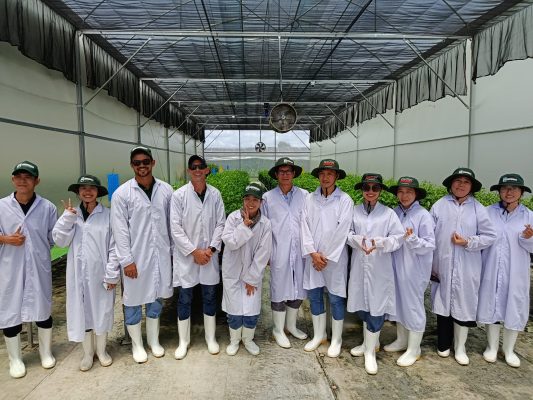
Can Tho University is one of the key partners in SUCCEEDS, and this is the problem it is there to work on. Its role is to carry out the scientific research behind the citrus sector in the Delta and to promote the adoption of new practices across it, strengthening the whole value chain by starting at the outset, with the farmers’ own work. Under the project, The Fruit Republic has partnered with the University’s Department of Plant Protection, led by Assoc. Prof. Nguyen Thi Thu Nga, Dean of Plant Protection Department, under a formal research agreement that builds on a collaboration developed over many years of joint work in the Delta’s citrus provinces. The workplan is now being implemented in Long An, Tra Vinh and Binh Duong, on seedless lime and pink pomelo.
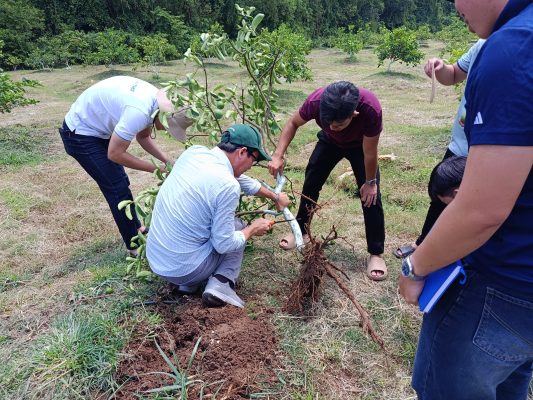
The components of the research are necessary to one another: none of them stands on its own, and each depends on what the others produce. Most of the work is carried out on the farms themselves, where the conditions are real and the results carry the most impact. It began with a review of existing Vietnamese and international research, now concluded, which set the direction for everything that follows. The remaining components are ongoing: twelve months of monthly pest and disease monitoring in representative orchards; surveys of conventional farmers, model farmers and extension staff to establish how these problems are currently recognised and managed; laboratory testing of whether the bactericides, acaricides and insecticides in common local use still work; the development of alternatives, including bacteriophages and plant defence inducers for bacterial canker and biological control of mites and thrips with predatory Amblyseius mites; large-scale orchard trials comparing the resulting integrated approach against standard farmer practice, assessed for both pest control and residue compliance; and the screening of nursery seedlings with rapid diagnostic kits to establish a practical route to disease-free planting material.
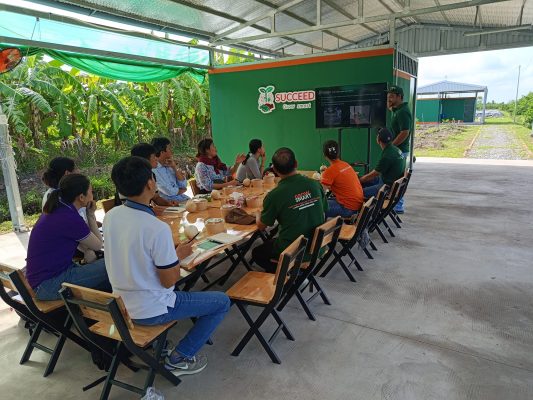
Those results are meant to reach the orchards, not stop at the laboratory. The work is coordinated through monthly meetings between the University team and the project team, which keep the laboratory and field activities aligned with what the extension teams are seeing in the orchards. It also involves master’s students, whose thesis research is embedded in the workplan — building the next generation of Vietnamese plant protection specialists alongside the immediate results.
Grow Smart with Us!
Fill in the form if you want to learn more or participate in the project!