
With over 500,000 hectares of tropical fruit cultivation, the Mekong Delta is Vietnam’s most important fruit-producing region. Dominated by smallholder farmers, the sector supports the livelihoods of an estimated one million farming households, approximately four million people.
A critical step in establishing and managing a successful fruit farm is the selection and planting of high-quality seedlings, which are produced by specialized nurseries. Despite the sector’s significance, no comprehensive study had previously been conducted on the fruit nursery industry in the Mekong Delta.
To address this gap, the SUCCEEDS project team carried out the region’s first fruit nursery census in February and March 2025. With the support of all provincial Departments of Agriculture and Environment (DAE) in the Mekong Delta region, there are over 8,000 active nurseries (all types included, with and without business license). From the list provided by DAEs, there are 741 nurseries registered. Among these, the team identified 70 fruit nurseries which have active production operations across the region. Of these, 51 nurseries were visited for short interviews to gain an initial overview of the sector.
At the time of the survey:
- 69% of nurseries produced and sold both citrus and other tropical fruits.
- 28% focused exclusively on citrus.
- 4% specialized in other tropical fruits.
Among tropical fruit seedlings, durian (27 nurseries) and jackfruit (22 nurseries) were the most commonly produced. Other varieties included star apple, mango, guava, longan, rambutan, coconut, mangosteen, and more.
In the citrus category:
- 43 out of 51 nurseries produced and sold seedless lime.
- 29 nurseries offered pomelo (mainly pink and honey varieties).
- Other citrus types included orange, clementine, seed lime, kumquat, and several local varieties.
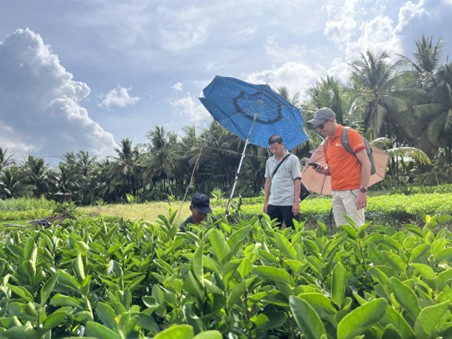
Image 1: Project team interviewing farmer
Bến Tre Province emerged as the leading hub for citrus seedling production, offering a wide range of citrus varieties.
In terms of production area:
- Most nurseries operated on plots ranging from 1,000 to 10,000 m².
- Eight nurseries reported significantly larger areas (15 to 35 hectares), often consisting of land rented from other farmers.
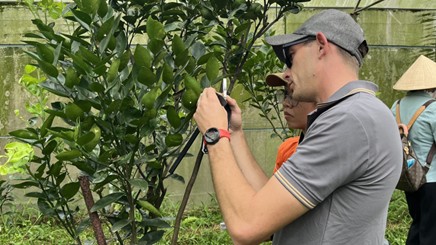
Image 2: Inspection pest mother plant
Based on the findings of the census, 25 nurseries were selected for a more detailed survey scheduled for April. From this group, 10 nurseries will be invited to participate in the SUCCEEDS Nursery Development Training Program, aimed at enhancing nursery practices and supporting sustainable growth in the citrus sector.